
Owners & Experts · Episode 733 min
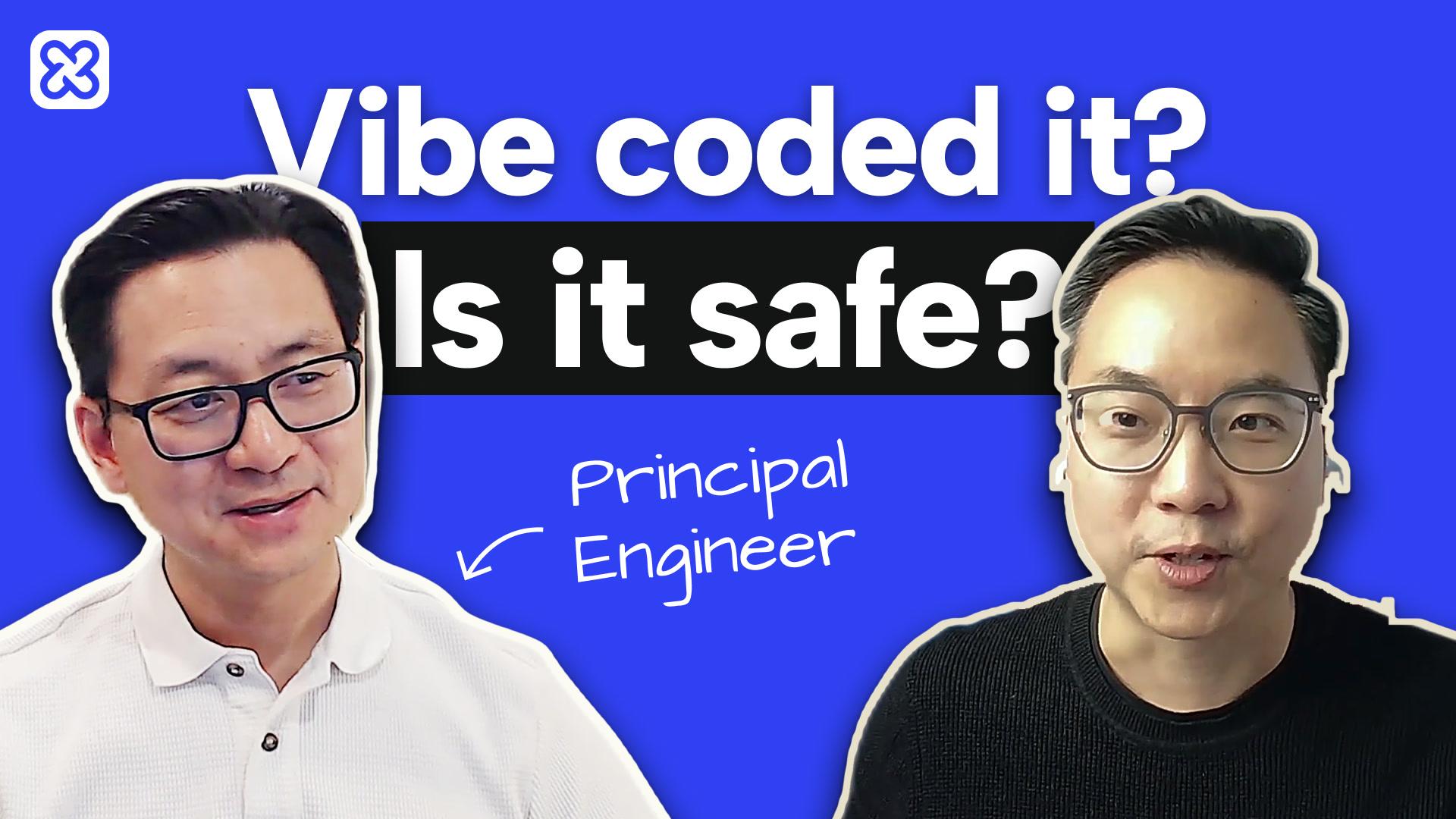
Vibe coded it? Is it safe?
David Shin, Partner, CollectiveXP
David Shin was one of Flipp’s first engineers. He built the ad platform that grew to take 100,000 requests a second, then helped grow engineering to more than a hundred people. Owners are now building their own software with AI, and it works. David’s question is when to ask for help: if something feels scary, you’ll ask. The dangerous case is when nothing does.
In this episode
- Why vibe coding is great for prototypes, and what an engineer checks that a builder doesn’t
- The lookup table that passes every test and breaks on the eleventh question
- Building it instead of paying for it: what the subscription was really covering
- The brake tool and the drop of fluid: the problems you don’t know to look for
- Gluing old systems together, and what happens when you open a second office
- Connecting systems without knowing how the connections work
- How we put guardrails into our own AI builds
- A 7-question checklist for when nothing feels scary
Try this week
- Ask your coding agent: is my solution secure?
- If something feels scary, reach out to someone who knows.
- Go through the 7-question checklist and see how you score. If you only get one or two, talk to an engineer you trust.
Checklist
7 questions: when to ask for help with something you vibe-coded
If something feels scary, you’ll ask for help. This is for when nothing does. Answer each one yes or no. Yes means you’ve handled it.
1If the person who built it left tomorrow, could someone else fix it?
2Are passwords and keys kept out of the code and out of spreadsheets?
3If it broke at 2am, would you find out before a customer did?
4Can you try a change without touching the live version?
5Does it still work if two people use it at the same time?
6Do you know what customer data and money it touches, and where it goes?
7If it went down for a day, could the business keep running?
Answer each one to see your score.
- Mostly yes:
- keep building.
- Only one or two:
- talk to an engineer you trust.
Chapters
Ask the show
What would you have asked David? Send it in: we put the best questions to future guests.
Links
David is John’s partner at CollectiveXP. This episode isn’t sponsored.
Read the transcriptHide the transcript
David Shin: One drop of fluid on the ground, you know, as a mechanic, you know, that could mean big trouble, right? Depending on where it is, right? But as a casual DIYer, that might not even register to me, right? set a ticking time bomb that can go off at any time, but you don't even know that there's danger.
John Ling: That's David Shin. He built the ad platform that takes up to 100,000 requests a second. Owners are building their own software with AI now, and it works. The risk, however, is a problem that you cannot see. Today, when to ask for help when you need it. Welcome to Owners & Experts: candid conversations with Canadian owners growing a $5 to $20 million business. My guest today is David Shin. He was one of Flipp's first engineers, built the platform that served its ads, and helped grow engineering to more than 100 people. Today, he's my partner at CollectiveXP. We go way back to Flipp. We used to be neighbors, and we've shared more than a few scotches. So, Dave, first question I want to ask you. When I joined Flipp, you onboarded me. You taught me how IAB ads worked and how our ad platform served them. I came from design and project management. So it was one of the most useful things that I've never really understood when I first joined Flipp. Do you remember this?
David Shin: Actually, John, that was such a long time ago that I don't remember. But I do remember working with you on the ad system, and those were good times.
John Ling: Yeah. So, I guess the system got pretty big. I mean, like, we're serving ads quite a lot. Like, maybe share a little bit of numbers. Like, you know, how many people were on our system at one time, just so people can kind of appreciate the scale?
David Shin: Yeah. So, if you're talking about growth, when I first built the ad system, we were getting something like 10 requests a second. But then, you know, by the time I left Flipp, we're at a scale where we're getting, you know, 70 to 100,000 requests per second. By the time I left, we had well over 100 microservices within the engineering org. So, in terms of users, I think by the time I left, we're at 50 million monthly actives. So, that gives an idea of the scale that we were operating in.
John Ling: Okay. Well, I think most of the people who are listening to our show probably don't need the engineering at Flipp's level, 100,000 requests per second. So, what I want to know is, what are some of the principles that still matter, even when we have 10 requests per second?
David Shin: Yeah, I guess the difference there is the scale and the capacity of your microservices. But things that don't change are things like security, correctness, you know, and the ability for a system to grow, for example, and change over time. These are all engineering principles that whether you have one customer or millions, these things are the same, right?
John Ling: Okay. So, well, in today's day and age with AI, a lot of people vibe code. I think that I do that a lot, but how is it different when you do it? Coming from the engineering person with all the principles in mind, what's the difference?
David Shin: I think for an engineer, yeah, the way that we interact with these coding agents is a bit different. We, I guess we dive in and ask, as a vibe coder that's non-technical, maybe focus on the what. As an engineer, we want to know, you know, the why, maybe, or the how a little bit more. So, you know, let's say a non-technical person will prompt once and then the whole app is built. For an engineer, we want to know what's going on under the covers, so it will probably take a little bit longer. But I would like to think that you would end up with a better result, right? Because as an engineer, you care about engineering principles and design, right?
John Ling: A lot of the owners that we heard or we've interacted with over the past a while, they were people that were never coders. They've never coded in their life. What are some of the concerns and what are the issues that you see could be stemming from this?
David Shin: Yeah, I guess in the extreme case, if you tell AI, I'm not saying that the agents would do this. But let's say you said, oh, I want to build a system that, you know, if it's asked these questions, it gives these answers. In the extreme case, the agent might say, okay, those are your requirements. Well, I'm going to have a little lookup table of these 10 questions that are asked and these are the answers that I give. And let's say you had a test suite that just tests against those 10 questions. And then the coding agent just wrote a system that literally looks it up and gives the answer. If that question is asked, then, yeah, the system works as designed, right? But you look under the covers and you see that it's a lookup table and you're like, okay, this is, you know, you ask the 11th question that's different and the whole system falls apart. So a lot of times I do find that the agent either hallucinates an assumption, right? Or makes the wrong assumption.
John Ling: I've been hearing vibe coding as CRM a lot. Let's say that this owner does not want to pay for Salesforce or HubSpot and decides to vibe code as CRM. What could happen if the business currently has a CRM that works with their current scale, but what happens if the business grows like 10x the current size? What would be some of the risks that you will be thinking about as an engineer that some of the owners may not?
David Shin: Yeah, there's a few things. One is just basically, if you 10 times the amount of usage, then what are the weak points in the system that will slow down, right? And if it just slows down, that might not be a big deal. But how about if you start getting incorrect results because you have multiple users hitting at the same time and you didn't do the proper, like you didn't account for that in your design, right? Making sure that there's the proper isolation and all that stuff. Another thing is software that are built on these stacks, they do require updates and maintenance, right? There's vulnerabilities that come out all the time and you do need to patch your systems. And if you're not even aware that such a thing exists, then you will never look for patches. Or if you get notification that there's some kind of vulnerability, you wouldn't even know how to do it, right? If you knew that need to be done, sure, you can ask the agent to do it for you. But a lot of times, non-technical people don't even understand these basic concepts of what kind of maintenance is required for these platforms. And when you pay that subscription for that SaaS service, all that stuff is taken care of for you. And in a very efficient way too, because a team of 10 engineers or 100 engineers can support millions of customers. But if you're the only one that built your software, then you're responsible for all that stuff.
John Ling: But for the owners, could you try an analogy? Maybe we talk about cars all the time. Can you give a car analogy of what could be an issue that an owner would face?
David Shin: I guess if we're talking about cars and say someone like me, I do like to DIY. One type of job that I don't try to attack or I don't try to do myself is brakes, because I don't want to have to bleed the brakes and then change all that stuff, right? But then let's say there was this new tool that came out called Brake Master 2000. And all you got to do is just put it onto your wheel hub and they will bleed the brakes, change the pads and the disc all at once, and then button it back up. So that's great. So I'll be okay and I'm going to try to attack it, because I got this brand new tool. And I guess in this analogy, that tool is a coding agent. So I got to roll up my car. I got to still lift my car off the ground. So I drive my car up into my garage. And then so the steps that the tool tells me and its instructions is okay, jack up your car, take off your wheel, and then put this Brake Master 2000 onto your wheel hub. So sure, you follow those instructions, and then the job gets done. But there are other things that if I was a professional mechanic, I'd be listening for things like, as I'm driving up, does my engine sound right? It's making this ticking noise. Is that something? Is it not? Is it DIY or you might not even notice any noise at all, right? And then when I jack up the car, I notice that there's a little bit of moisture in one of the components. Well, what is that component? I have no idea, right? There's one drop of fluid on the ground. As a mechanic, you know, that could mean big trouble, right? Depending on where it is, right? But as a casual DIYer, that might not even register to me, right? So a lot of the experience that you get from doing things for many, many years, and having those things like a drop on the ground means that some component was leaking, and that ended up being like 20 hours to fix, right? Or else broken down on the side of the road. That kind of experience only comes by, you know, by doing it for many years. And those are the things that you miss. If you're a vibe coder, and you don't really know what's going on under the hood, right? These are the type of things that you don't even, that you're completely unaware of. You know, that you've set things up in, you know, the coding agent, or the way that you set things up, set a ticking time bomb that can go off at any time, but you don't even know that there's danger.
John Ling: So the risk is not AI, it's actually what a builder didn't think about or didn't know, because, well, there's no experience because AI is kind of taking that experience out of the hands of the builder, really. You already mentioned the subscription that people pay, even though they might be expensive. It is going to something that helps cover the blind spot for these owners, right? So what does owning software really cost?
David Shin: So I guess before the days of vibe coding, owning software involved writing the software, and that was a huge part of the cost, right? Because, you know, engineers are expensive, and coding takes a lot of time if you're doing it by hand. So definitely these vibe coding platforms and coding agents have reduced that to near zero. I mean, you still have to tell it what to do, and that takes time and iterate. Yeah, but the actual coding time is drastically released, and that's great, right? But the maintenance, maintaining these things, right, is something that doesn't go away. So there will always be a base level of investment you need to put in to maintain, and whether that means patching the servers or the systems, but also making small changes because your business is going to change. So when the nature of what the system needs to do changes, you need to go in and actually change it, right? Now, writing the code to do that, again, it's short, but you still got to identify what needs to be done, right? Tell it what right looks like, and then go and make the change.
John Ling: The second group of companies that we typically see is when they have some older systems, and they typically use AI to tie them together into one workflow, right? That's a value. Now, what's the catch once the whole business runs on that every day?
David Shin: Yeah, one thing to think about when you're doing that, it's great that you can do that and then make the overall solution or workflow much simpler or much easier and require a lot less humans. So what happens is you build these systems and it makes your business be able to scale without you scaling your head count, right? So when you first introduce that automation, your business can already support the existing business because that's the way you've been doing it, right? By manpower or human power. Now, you have this automation in place, and because of that, because this automation can scale infinitely, like the way a human can't, now your business grows to 10 times, but you still have the same head count. That automation were to go down, you actually can't fall back on anything because you literally don't have the capacity to support your business. So that's one of the things you've got to think about. Now, your automation becomes a critical part of your entire machinery. So you've got to make sure that it doesn't go down. And if it goes down, then you can fix it really quickly, right? Yeah, because it becomes a core part of your business. So there will always be a certain amount of investment you need now to make sure that that core part of your machinery is working and healthy.
John Ling: Kind of seeing that situation where business contact changes, like opening up another location, also the same country that can create a set of effects because of
David Shin: that one change, right? In that scenario, in another location, another office, or maybe if you expand your business to take on, let's say you buy another business and the workflows in that business is a little bit different. Now you have a system that's running and now you have to adapt it to do another workflow, right? The question then is, how do you change that system without making sure that the old system that's keeping your machinery running? Can you change it on the fly? If you're going to introduce a change, how do you do that safely? So these are the kind of things that if you have good engineering principles and the way that you build and maintain your product, you'll be able to do it because you know how to do it. One example would be you always have a testing environment that exactly mimics your production environment and you always test on that testing environment first, right? So the important things in that case is that your testing environment is exactly the same as your production one, maybe with some test data. It's not like you build once and then you're done. You're building once and you're constantly changing. So are you set up to be able to do that successfully?
John Ling: The third one is the one owner's loose sleepover, security. You connect your system, say QuickBooks to your CRM and the AI wires it up for you. It logs one app into another with something called OAuth. What don't people see about how those connections work?
David Shin: So you have an automation where you basically authorize the automation to log into your account and get your data, right? So if you understand the way OAuth works, I guess without going too much into the weeds here, there are certain scenarios where that OAuth connection can get severed, right? And let's say you're using a platforms connector, right? Or the platforms OAuth app. Now, for some reason, if that platforms OAuth app gets revoked, you know, from the provider, for example, like QuickBooks decides to say, hey, an example would be like, let's say, Claude. Claude has its own OAuth app that lets you connect your QuickBooks account. If for some reason, QuickBooks decides that, you know, Claude is not complying with its own policies, you can just say, hey, you can revoke that OAuth app site. You can revoke the OAuth app's ability to access the user's data. So in that case, your automation just fails, right? So then the question would be, hey, instead of relying on Claude, Claude code's OAuth application, the safer way to do it is if I registered myself or if I registered my own OAuth app with QuickBooks, with the QuickBooks developer portal or platform. So that's something that an engineer would understand because he understands the way OAuth works, right? If you're non-technical, there's no way you're going to be asking which OAuth app, you know, is underlying this connection, right? Because even if Claude told you, you wouldn't understand what it's saying, right? So yeah, I would say that would be one of the pitfalls, right?
John Ling: An example of one of the pitfalls. Okay. So I guess for most owners listening to this, they're probably building one of the three scenarios we kind of talked about. What would be the right time to talk to a professional, to talk to an after engineer and say, okay, when should I do something about this, right? Like how do I limit my exposure to the risks that I might be facing?
David Shin: Yeah. The basic thing is first, you want to listen to your gut, right? If something scares you, I guess that's the obvious case. If something scares you, someone who's an engineer that can help out, you would say, hey, can you look at my stuff? Make sure that I'm not going to run into any of these pitfalls that I mentioned before, right? I guess the more difficult case is when you actually don't know, when you don't actually feel anything, you think, hey, everything's working great, right? Let's go. I think one good time to ask is you've built your prototype, you've proved that it can improve your business, right? Let's say you want to replace a SaaS service that you're using because a lot of SaaS services will get you to 95% of what you want it to do. But that last 5% really bites you because it's not exactly what you need, but it's close enough. So you fill those gaps with some human processes to make it work because there's no other option. But now with vibe coding, you can actually make that last 5% really easy, right? With your vibe code. So now you have a component that's a system that you built, an automation that you built, and you're going to be running real customer data through there in production. So that might be a good time before you actually launch it to say, hey, to ask someone, is this scalable? Is this secure? All that stuff. Reach out to your network, find anyone that knows any engineers or is an engineer and that's worked on these kinds of systems. You can ask them, hey, am I doing anything wrong here? I did prepare a checklist of seven questions.
John Ling: Before we go into checklist, I do have a couple of things to ask you because I know that, for example, I wouldn't call myself an engineer. I would say that I'm more of a product and design person, but I've been using a lot of the vibe coding tools to build systems. It's a little safer because you and our engineers have put together some of the guides to prevent me from going off the rails, if you may. Can you tell us a little bit about what are those things that you have built that protects a vibe coder like me from doing some incomprehensible mistake?
David Shin: Without sounding too self-serving or tooting our own horns here, we have the benefit of having seasoned engineers on the team. We did build a platform that, when we look at all these different types of automations, we look at what do they need. A lot of times they need a front end for users to interact with, for human-in-the-loop processes. We need to securely hold credentials. Even basic things like source control, for example, we use GitHub. Every automation will have its own repository, and then in order to deploy that, we have our own pipelines, called CI/CD, where you check in code and automatically deploy it. All these basic components are in place so that someone like you can go visit a client and just focus on what are the business problems, and all the architecture and technical components are already in place. When you ask the coding agent, this is the business problem. Build it on this platform, and with that consistency comes safety because you're not doing all these disparate things that might have their own vulnerabilities. If there's a vulnerability that comes around, then we know, okay, you know what, this will probably affect all these automations so we can just fix them all at once. That's one way to do it. Obviously, a lot of vibe coders or business owners don't have the benefit of that, having an engineering team that can build a platform like this. A lot of these vibe coding platforms themselves do have, for example, Lovable or other these vibe coding platforms, will have a lot of this stuff in place as well.
John Ling: That inherently makes it a little bit safer. I do notice because sometimes I see some of the codes that's written. Not written on our platform, but on some other platforms. Then I do see that the API key is stored in plain text on the file in GitHub.
David Shin: I guess the main thing is that the foundations were built by engineers, and the reason why we did it was not necessarily for security. It was more for you guys to be able to work fast. If you build something, we won't want to rebuild it every time because initially we would just vibe build things. Then I remember that specific case with the credential in the code base. Whenever engineers did a code review and said, "Oh my goodness, you found that one right away." We said, "You're going to be going out and building a lot of things. Let's get ahead of it and then just make sure that we don't have to put in a lot of work every time we want to productionize it." Because you're out there building prototypes again. Basically, you're building prototypes to show the clients how automation can help them. But then obviously, before we launch that into production, it would be taken back to the engineering team and say, "We write it or at least make sure it's safe." After that happened a few times, we said, "Okay, you know what? We're going to make a
John Ling: platform that will do all this stuff for you." I guess laziness is the
David Shin: mother of all innovation, right? Yeah, that's true.
John Ling: Our system is part one. I know that we also have our process. Can you tell us a little
David Shin: bit about the process? All right, yeah. We know the power of AI and sure, it can write code really, really well. But there's other aspects of engineering where AI can really help. In the industry, it's called AI SDLC, software development lifecycle. A lot of times, in different parts in the engineering process, AI can really help you a lot. We just use it wherever we can. First, when describing what we want to build, we do it in a very systematic way. Then we make sure that you tell what you want it done and then it's called an intent. But yeah, so what you want to build, and then obviously, the part will give you a design. You can review the design. That's where an engineer will have a look at it and then says, "Okay, this design makes sense." Then you do the build. Let AI do the build, but we use AI tools. Now that you have a coding agent, you tell it, "Hey, write these tests." It could do really, really good tests with very, very little effort and it can save you a lot of pain later if you introduce bugs. So we have AI doing the tests and then also obviously getting the code into production. That doesn't really necessarily need AI. That is just a deployment pipeline, which most mature engineering orgs will have. But then there's also the monitoring, the monitoring side where you want to be constantly looking at how your system is operating in production and you want it to find problems before the customer finds problems. Another thing that's happening in the industry now is even when those problems are found, it will then automatically fix the issue and then ask a developer to review it. So the developer's job is just to review the fix that the AI already did before you woke up in the morning and even realize that there was an issue. So yeah, we're using all those AI in every part of our engineering process.
John Ling: I guess we have these. Not everyone needs our platform or process to do this, but without this, I can see... I know that at least for one, I wouldn't move as quickly while building these prototypes or these systems. And two, we've seen some of the cases where when those are not built in place, what happens after. So now remember how I said that, okay, maybe hold on the checklist. I think this is actually a great time to talk about the checklist.
David Shin: First of all, what is the checklist? Yeah. So basically, this is kind of to help our listeners know when is the right time to get help. So this is more like not the case where you feel something's off or you're scared about something. In that case, obviously talk to someone, definitely get help. You'll naturally do that anyways. But this is for those other cases when you don't know what you don't know, this checklist will help. You ask these questions and if there's only one or two yeses in this checklist, then that's when you know out of the seven, that means that there's a bit of a gap and you should just talk to an engineer that you trust. And if you answered yes to all these questions then like I mentioned before you go to production, that could be a good time to ask. Yeah, but anyhow, without further ado, let's look at that list. So if the person who built the software left tomorrow, can someone else in your company fix it?
John Ling: Second question. Well before, why does that matter?
David Shin: I mean it doesn't matter if you can fall back to a human process, if you have a backup. But like I mentioned before, a lot of cases you build this automation and now it becomes a mission critical part of operating your business. So you got to make sure that all the knowledge is not in one person. Again, engineering principles, make sure all the code is stored somewhere, that it's up to date, that your systems are running that code. So things like that, you want to make sure that someone else can know where to look to see if problems happen and then again know how to fix it. Maybe it's even like you need someone, if you built your stuff on a vibe coding platform, do they even have a login to that platform, right? Yeah. So that's question one. Question two, are passwords and keys kept out of the code and out of spreadsheets? If you've never looked at the code or you don't know, maybe you should look. If you don't know where to look, then definitely ask for help. So question number three, if it broke at 2am, would you find out before a customer did? So this is the observability part, right? Like you don't want to find out problems when you want to be able to detect problems early, right? So you want to make sure that you have the proper alerts and observability in there. And that could be like an agent that actually just checks your data, right? Every hour or something like that to make sure nothing's broken. Question four, can you try change without touching the live version, right? Number five, does it still work if two people use it at the same time? So when you're vibe coding something, you're the only one clicking the buttons. You don't have to worry about things like idempotence, which is a fancy word. If you were to repeat the same action twice because two people click the same button, does it cause problems in your database or in your system logic? So that's one thing to think about. It's like, yeah, sure, it works as a vibe coder in production. There's going to be many people using it. Will it still, will it fall over? Question six, do you know what customer data and money it touches, right? Where the data goes? Like do you understand these flows? Do you understand what's being exposed where? A lot of times if you're vibe coding and you don't understand the architecture, you will actually have no idea. So yeah, that's definitely a question to ask yourself. And then number seven, if it went down for a day, could the business keep running? That is kind of similar to the one in number one. It's like, is admission critical? And do you have business continuity if it goes down? And if the answer is no, then you definitely need to make sure that you're not putting a risk, an avoidable risk to your business. And it's avoidable by making sure that all the other, all the good proper engineering principles are in place. And if a problem happens that it can be dealt
John Ling: with without affecting your business. So when the owners take your list, score it, and they have a question, they should talk to your engineer, they trust. Do you think that today with the AI advancements, is it
David Shin: okay to ask AI yourself to check? I would say definitely do that as a first step. I guess the question is like, would you bet your business on it that it wasn't hallucinating? And then there's also like, there is code level risks, and AI can probably address those. But then a lot of the stuff that we're talking about here is more, I guess, these engineering principles that are executed, like they're people processes, right? Having someone, like having a backup, right?
John Ling: Having more than one person understand, right? Yeah, how would I know? Yeah. We're putting David's seven questions in the description, and you can download the checklist at collectivexp.io/podcast. If you went through it and only got one or two, I'd like to hear about it and see how we can help. Now, David, last one. Come Monday, for an owner that has tried vibe coding, what would be the one to three action items that they should
David Shin: do after listening to this? Yeah. Number one, definitely ask your coding agent, is my solution secure? Number two, I guess, if you're feeling scared of something, definitely reach out to someone. Maybe I don't need to tell people to do that. They'll do that naturally. Number three, go through that seven point checklist that we talked about here and see how you score. If you feel like you need help after that, then definitely talk to someone.
John Ling: That's it, I guess. If you're running a business and you've got a question, send it to collectivexp.io/podcast. We might answer it on the show. Subscribe and tell us who we should talk to next.
Where are you standing?
Owners
Start with a confidential call.
Thirty minutes on your company. We will tell you straight whether we are a fit.
Tell us about your company

 David, Victor or Toby
Operators
Start with a discovery brief.
One workflow, one question at a time. You leave with a brief to share, and a call with us if you want one.
Start your discovery brief



 Michael, John, Justin, Steven or David
Not ready yet?
New webinars, podcast episodes and the tools behind them, by email.