
Owners & Experts · Episode 644 min
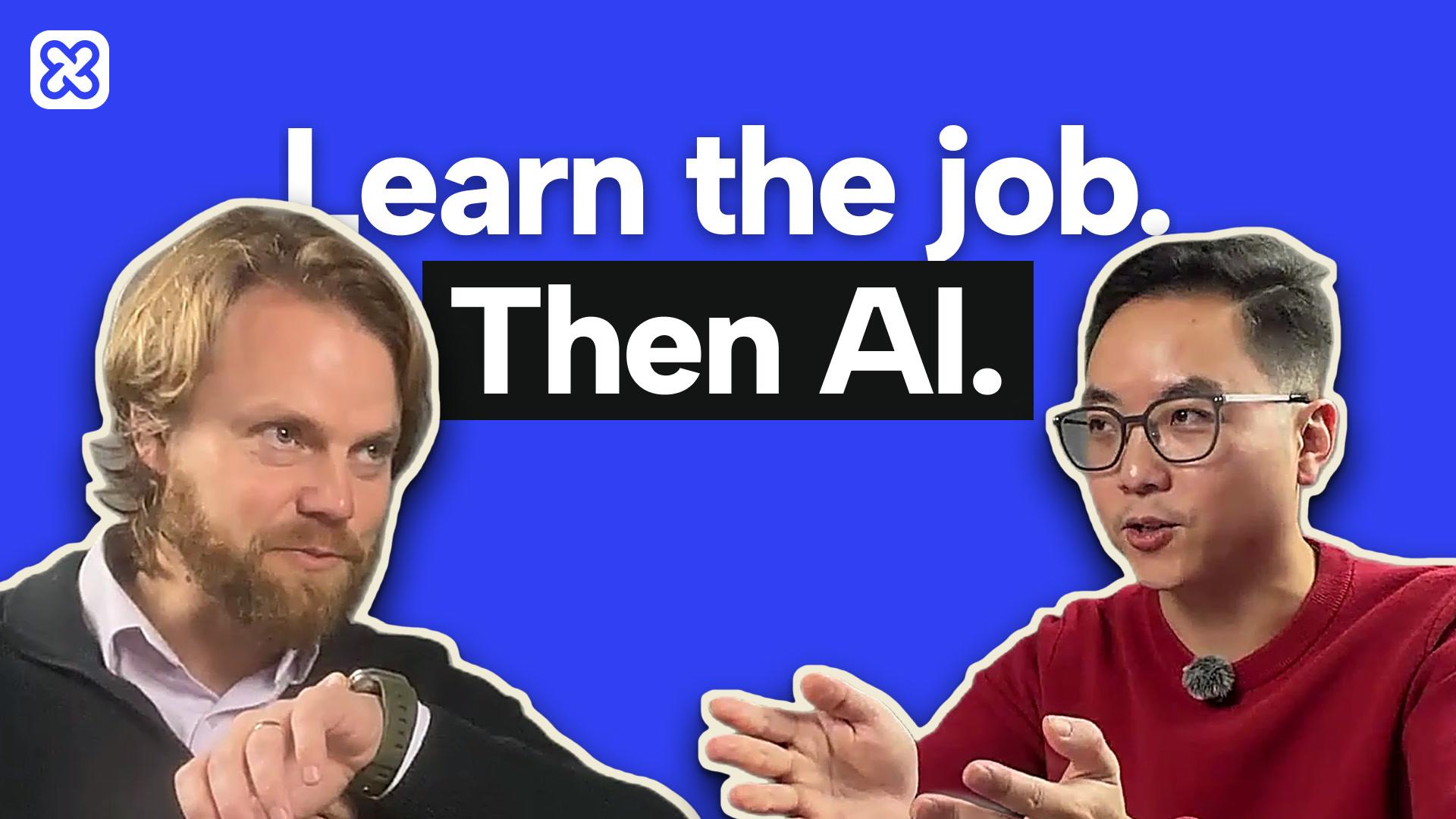
Learn the job. Then AI.
John Dick, GM, Niagara Motors
John Dick was Flipp’s first hire. Now he runs his family’s 80-year-old car dealership, Niagara Motors in Niagara-on-the-Lake. He went all in on AI, learned the hard way where it backfires, and found what pays off: giving AI to the people who already know the job.
In this episode
- From Flipp’s first hire to running the family business, and why nobody saw the last 15 years
- What you inherit: people with 40 years on the job, 80 years of trust in town, and tools that weren’t built for how they sell
- Popsicle sticks and glue: why the add-ons around a dealership’s core system don’t talk to each other
- You can’t order a used truck, or can you? 300 trucks, 27, three calls, three deals
- The phone never rang: why reps need a reason to call
- Off the lot: sponsor a person, not a logo
- No cure for laziness and apathy, and why you master the craft before you hand it to AI
Try this week
- Give your team clarity on exactly what you expect.
- Give them tools that fit how they already work. His people are great on the phone, so they talk to the system instead of typing.
- Measure what matters, and hold everyone to it.
Chapters
Ask the show
What would you have asked John? Send it in: we put the best questions to future guests.
Links
Niagara Motors is a CollectiveXP client. This episode isn’t sponsored.
Read the transcriptHide the transcript
John Dick: A lot of the times I would default to having to ask AI how to do this without actually going through the pain of learning it first myself. I'm like, shortcut, I'll just use AI. But that shortcut has actually become a long cut.
John Ling: That's John Dick. He went from selling tech at Flipp to running his family's 80-year-old car dealership. What paid off was giving AI to the people who already knew the job. This is what taking over a business actually looks like. Full disclosure, Niagara Motors is a CollectiveXP client. So John, to start, I want to talk a little bit about your transition from digital Flipp to now moving cars in dealership. Can you tell me a little bit about that?
John Dick: It's a family business and something that I felt the desire to continue and it's been around for 80 years. I wanted to make sure that we can bring it into the next century. I think that there's an opportunity there to work with my family and to continue a legacy of what they've built and to continue that and to now bring it into the next phase of how do we leverage technology? How do we leverage AI to make this company very efficient and continue to support the community that we operate in?
John Ling: Great, so you mentioned that you want to bring it to a more efficient state. What does the dealership run on today and what are the things that tech people typically underestimate?
John Dick: Yeah, I think tech people underestimate the willingness to embrace new technologies by people that have been in their seats for a number of years and are very good at their job. We have a lot of people at the dealership that have been there with us for 40 years, 35 years, 25 years, and these are longstanding employees and they're very good at what they do. But a lot of the processes that they're used to are face-to-face processes. A car comes in, I tell somebody to do something for it, and coming from a tech background where our communication was Slack, email, text messages, very fast responses with our customers and internally with our teams, that was probably the biggest hurdle for me, coming in and being like, I send out an email and I get a couple responses, but I know everyone's reading them because of what they're talking to me about, but that was the biggest surprise for me is just the complete difference in communication. And now I see it with the younger generation coming up 'cause they're texting through Snapchat.
John Ling: And they're even faster.
John Dick: And even, I don't know, I don't know who's that. I feel like I'm a dinosaur in some cases, working with some of the younger people, but I try to keep up with them. But I think that there's a lot of wisdom that comes with people that have been there a very long time and we can learn from that wisdom and then say, how do we take these analog processes and layer on AI on top of that to make everything better?
John Ling: So you mentioned 80 years, and I think my research shows that the dealership was founded in 1946, right? Wow, so it's like 80 years to date. Yeah, that's awesome. Okay, I can understand the speed of embracing tech, but when you walked in, how did people think of you when you got into the role?
John Dick: Well, there's probably a little bit of thinking about nepotism 'cause it was my dad's dealership and now I've been brought in to run it. And so there's a lot of hurdles to get over in that regard. And I still think I have some more hurdles to go over there. But I think that is difficult because you're coming in and people haven't seen the work that you and I did at Flipp. And so all they know is that I used to sell cars there, I used to clean up cars there, I used to work in the drive-through, and now they're coming in, now I'm running it, but they didn't see the last 15 years of like hustling and learning how to build sales pipelines, learning how to close business and learning how to just serve the customer that you and I got very, very proficient in. And so helping them understand of what can be done and how this is where we're operating right now. And with your talents and your ability to connect with people, you could be way out here. But it's like implementing those systems, implementing the tracking, implementing the training. How do we get people there? That is so difficult and I think that's the biggest challenge is that people don't necessarily know what I've seen and I don't know what they've seen. And so it's kind of both ways, but a lot of times I'll come in with an idea and I don't go and bring it to the whole team, I'll bring it to a smaller group who I know I can work through it with versus trying to boil the ocean. I really try and pinpoint a couple of guys. If it works, then we can expand it. And that's actually what we're doing with CXP is that we're starting with a small group of sales reps and managers so that we can get the feedback and we can rapidly prototype. Hey, I want a button here. Five minutes later, there's a button there. That's unheard of to them. They're seeing the platform being built as we're using it. And so it's now generating a lot of excitement within the dealership 'cause it's like, hey, I want to be part of that now. It's like, yes, that's great. You can be part of it. Just know that the expectation is that you're going to use it and you're going to give us that rapid feedback. So we can get it through CXP team so that we can make this better. I'm actually worried for software companies because the speed at which we're able to move and to customize the software for our team and to customize it personally for where we see we're a little bit weaker or where we're a little bit stronger. There's no way software companies, the way they've been built in the past can even come close to this. What I've got in the dealership world is there's a lot of appetite to try new things. But the trying new things is like if you have your DMS systems, which is your dealer management software, if you have that, you'll have a company come in and it says, I can do this with AI. And it touches a little piece over here. Another one comes over here and says, I can touch this with AI. But they actually don't talk to each other. And what happens is, and I'm going to leverage this. This is not my saying. It's we had saying, but Popsicle sticks and glue is really how DMSs are built. Not the DMS is not Popsicle sticks and glue, but everything that touches onto it is like we have an attachment here, an attachment here, an attachment here. Next thing, you're paying thousands of dollars a month for every little piece. And they don't communicate with each other and they don't quite do what they want, what you want them to do. And so that's when when you know, I chatted, it's like, how do we build a brain for this entire organization? That brings all the data together. And we're going to get it one way or another. And we're going to use it to make our employees lives better. We're going to use it to make the customer experience way better and just to sell more cars and make more money. But that's the lagging indicator, the leading indicator is, hey, is my sales rep coming in today? I'm super excited because I've actually segmented the data for them, showed them exactly what to call, given the data of like, here's their past payments. Here's how the deal was structured last time. Here's something you might want to know about them, so that when that customer walks in, they feel so good. I want to tell one story is, I would like to read the Google review, but I'll just summarize it. And the person said, I've never had such a good experience at a car dealership as I have at Niagara Motors. And the reason is, he's like, I came back over the course of three months for many different things. And every time I walked in, I was met by someone friendly and smiling, yeah, I can't do that. And they also remembered the little details about my car, about my life. And so if I can package data and allow AI to supercharge that so that every customer gets that experience, or, you know, we won't be able to get enough cars. You know, we'll just, we'll have so many sales because when somebody walks in the dealership, they feel different, like, I'll give you an example. We closed the deal the other day with a bunch of asparagus.
John Ling: What?
John Dick: Yeah, exactly. Who does that? I just got off the phone with my dad. He was talking to a farmer and he's like, I got a problem. I got too much squash. I got to get rid of it before it goes bad. And so we'll partner with a soup kitchen. And so it's like, let's connect that. So it's like all these really random things. And you think it's random, but when somebody comes in, they feel that, they feel the pulse of the business, or they feel the, they get the vibes, as the kids say, right? There's vibes in the dealership and it's like positive vibes 'cause we're trying to help the community. But if I have a gentleman that leaves the company that's been there for a long time, all that institutional knowledge is in his brain, and not only institutional knowledge, it's the customer knowledge. He knows when so-and-so walks through the door, oh, that's this person, I played hockey with him, I know I volunteered, volunteer firefighter with him, I did all these different things. But if that guy leaves, how am I supposed to get that? So one of the things that you and I are working on is, how do we bolster the data in a way that doesn't include typing, but it's just interviewing and using voice, because the guy's really good at talking, they're really good at building their relationships. How do we leverage their strengths to get that data in? So that the next person, the next time that person comes in for an oil change, hi, Mr. So-and-so. Oh, I see that maybe it's like they like the Leafs, or they like the Jays, or whatever it is. It's something small, but it's like something to remember them, so that every time they come in, it's like, cheers, everybody knows your name. Everybody remembers something about you, and if we can have that as our focus, that customer 360 is amazing.
John Ling: How does a normal Monday look like for you now?
John Dick: Well, it starts off, so I've, I think--
John Ling: Yeah.
John Dick: So a typical Monday, or any day, I've actually set up systems leveraging the Getting Things Done framework, by David Allen.
John Ling: Yeah.
John Dick: And I think a lot of things that I do in the business, I try and look at frameworks and principles, and kind of work backwards from there. And so the Getting Things Done framework is always something that I strive to do, but life gets in the way, you've got so many demands, and it's hard to stay accountable. So to have an accountability partner, that's what I've set up my own AI for. So every day, I have a check-in with my AI, saying here's all the tasks that you've put in yesterday, I have Granola on my watch, so I can dictate to it. I can make notes, so I've always got, hey, look up chocolate recipe, or hey, make sure I get dry ice for the kid's birthday party. And all that goes into my, into Notion, it gets transcribed into Notion. And then every day, Claude is reading that, and it's spitting out, here's the things that, that we need to kind of organize for you, put it into different projects, and things that need to get done. And the one that I really like, it's so simple, but the one I really like is it goes through my emails, and it tells me all the people I'm waiting on responses for, and all the people that are waiting on my response. 'Cause I don't wanna be the rate limiting step, I wanna make sure I'm getting that information, but sometimes I drive an hour to work each way. And so I don't, sometimes I'm driving, and it's the end of the day, I'm super tired, well, I can just chat with Claude, I'm like, okay, what am I missing? Can you draft those emails for me? And it's just, it's really just unlocked, more peace of mind, and more space in my mind, because, you know, we're not created, to keep a bunch of tasks in our mind, we've been created to be creative, right? And to think through problems. And if I have all this burden in my mind of, oh, I gotta pick this up, I gotta do this, I gotta do this. Well, then I, my mind is not free to be creative. And so this system has allowed me to get that out of my head, and a system I trust, 'cause I'm using it easily. And it's just about breaking down the barriers to make it super, super easy. And I'm using it like a fraction of what AI can do, but it does serve a purpose for me. And I'm happy with where I am with that, because it has solved the problem of being overwhelmed with so many different projects. I dabble in many different things. And sometimes it's hard to keep focused on a specific task, 'cause you're always thinking about something, but if you have a system like Getting Things Done, and an AI agent to keep you accountable, it's a very good combination.
John Ling: I agree. So you're normally, that's your normal mind. How about when you walk into a dealership?
John Dick: Yeah, so when I walk into the dealership, Monday mornings we have sales meeting, and then right after that other management meeting, just to touch base with the managers. So that--
John Ling: I'm sorry. Was that before? What did you implement in those processes?
John Dick: I came into that process. So that process was already standing. I have, I put a lot of work in the meetings, like I really prepare a lot for meetings. So, you know, I'm putting together slide decks and making sure that I've got all my AI reporting, so that I'm recording all my to-dos, and making sure that those messages go out as quickly as possible after a meeting. Sometimes I'm a little bit delayed, but really it's a, it's the kickoff for the week. Okay, what do we work around this week? You know, what are the new programs from General Motors? What do we need to know? What are the new inventory coming in? And a lot of these meetings happen on the daily with the managers and the sales reps, but this is the only one that I'm in with the managers and the sales reps together. So it's really a way to, hey, what are we doing to surprise and delight our customers this week? Give me some stories from last week. Here's an example of, okay, an objection we might get. Or, hey, here's a scenario. What do we do in this, what would you do in this scenario? We'll go around the room. And it's interesting because a lot of times I disagree with the answers to the scenario. Not to say that what they're saying is wrong, but I just approach things so differently. Sometimes it can be interesting, but it's really good because all the people in the meeting are very engaged. And I find the more I prepare for those meetings, the more people kind of respond and get more value from them.
John Ling: This reminds me, you know, I remember at post-Flipp when we met up, when you started talking about like EOS and all these like process related things. And I'm just thinking way back at Flipp, you're more like a vision, like, you know, like, yeah. So what caused that transition, like, yeah.
John Dick: I am not an operator for sure. I know I'm operating, but my jam is visionary. I still love it. That's why I love working with you guys because it's like that nature is being scratched. Hey, let's push something, let's try something new. Let's see how we can do it. From an operations perspective, I need the accountability. That's why I have to get things done at home. I have a meeting later today with my managers just to map out monthly, monthly cadences and just like, okay, how we price the cars. What's our strategy on pricing? Like all this stuff. It's only come out of necessity, right? Operating things has never been my forte, but I'm leveraging technology to bolster my weaknesses in that area. Like there are way better operators than me. And sometimes I go to these General Motors meetings and I'm talking to some of the other operators and I'm trying to just like glean as much as I can off them. And a lot of those guys are very intelligent. Like smarter than I am, way smarter than I am. And I'm just like, oh, okay, that's an interesting idea. And then I just, you know, grew a little of that in the corner. And then I just remembered to look that up and try to implement that. But that was a really big transition for me. And so I love reading, right? And so I did read Traction, the book by Gino Wickman, which is the EOS platform. Got really excited about it. 'Cause I see the vision and then try to implement it. It's like, it was Logan Salisbury would say, it's like pushing a walk through sand, right? So if you can visualize just like, it's very hard thing to do to implement all those changes. And so now AI holding us accountable, it's like we're slowly starting to implement EOS and not a fully EOS way, but in a way that's like, there are specific numbers that we're tracking. There's specific, you know, our meetings are run a certain way.
John Ling: The Level 10 meeting.
John Dick: Yeah, Level 10 meetings. Everyone has a number, you know, do they get it, want it, have the capacity to do it? Like we've done some of that stuff. But really what I'm trying to do is I'm trying to look at the, I'm trying to look at the levers that are going to give you the most leverage. And where my expertise is, is on the sales process and is in, you know, prospecting, you know, moving the deals through pipeline, closing, customer service afterwards is like super important. So that's kind of my default, you know. Sometimes I talk to the fixed ops guy and I'm like, okay, you deal with the parts in the service 'cause like it's a super important, but way better than I do. And I kind of, I trust my generals in their positions to run their departments. And I've come to coming in and saying okay, we need to make sure that, are we pricing it right? Are we, you know, in the market right? Like I love doing the social media stuff. I like being out there. So the operation stuff is, it's difficult for me. I mean, it's very, it's not something that gives me energy. And that's why I have to focus on it in the morning when I do have energy. And the afternoon I can just, I don't know. I've done my work here, so.
John Ling: Well, you guys have like, you know, the five roles, right? Remember like the visionary, the integrator, the sales operator and the admin. I can understand, but like, I feel like you were actually moving to your right position, which is a visionary part.
John Dick: Yeah, so. But the work needs to be done to get us there, so we have the right systems in place, the right people in place, and the right processes in place that are running the whole dealership. And we're getting there.
John Ling: Tell me about the truck.
John Dick: This is an interesting story. So it's kind of like a two-fold story. It starts off with, I got one of the guys at the church, and he was looking for a truck. And he knew exactly what he wanted. We have this saying in the car business where it's like, you can't order a used truck. And I'm like, well, why can't you order a used truck? So he knew exactly what he wanted from the engine to the way the seats were set up in the truck to what year he wanted because it was a different dash to like everything, and he had a budget. And his budget was actually, it was a good budget. It was sometimes people come in and they're like, oh, I don't have enough money. Or they'll tell you I want all this for nothing. So everything was very reasonable. The problem is we didn't have the truck. So I thought, is it more likely that he's going to find that truck before I get one that comes in? Or is it more likely that I'm gonna get one in and sell him the truck? I wanna help the guy, like I want it because it's, it was a very specific truck that he wanted. So I'm like, okay, well, so I went on, I used a couple of AIs, I used Claude, I used Muse to scrape, you know, AutoTrader, CarGurus, Kijiji, Facebook Marketplace, and I just looked for that truck. And I found a couple, I called a couple of dealers that had them, but they were red. He didn't want a red truck. So that's fine. And so I thought, well, I've probably sold a number of these trucks over the course of the year. So I thought, why don't I look in my DMS and see what I have? So I did. And there was like 300 trucks that roughly matched, but the problem is the data was not clean. So I looked at it and said, well, the data's not clean. What do I do? Well, there's a free VIN decoder, which takes the vehicle identification number, puts it in and gives you some specifics. And it doesn't give you everything, but it gave you, it gave me the model, the trim, the engine. So I was like, okay, I can work with that. So from that, I narrowed it down from 300 trucks to 27 trucks. Then I had to use another system. I had to go actually in the General Motors portal, but those VINs in, so I could get all the build codes. And there was a specific code, I think it's, I'm gonna get it wrong, E3A or something, that's for a bench seat, he wanted a bench seat. 'Cause he has six people in his family. And so I found, I had to go in that control find E3A, and I found three trucks. And I looked at them and I was like, okay. So I looked at the trucks, I looked what they were paying. I looked at how long they had had them, service history, all that. I kind of got to know the customers that they were. And I worked with my managers saying, okay, how close can we get to their current payment? And actually all three of them, it was either at or slightly below. So I was like, well, now there's a reason for me to call them. So I called three people. The first guy sold his truck. He's like, I already got rid of it. It's like, okay. Second guy said, I really liked my truck, but maybe that's actually interesting. And the third guy said, I live in Bobcaygeon. Like I'm far away. Like I don't really come to town very often. So the first guy's out, the second guy, and he ended up trading his truck in for a brand new one. That was almost identical to the one he had. And then the other guy ended up coming to me later in the month. And I bought this truck off him too. And the first guy was a perfect match for the guy at my church. And we were able to do the whole thing, saved him out the door for under his budget. I was like, this is amazing. So I looked at that. At first it's like, you can look at that and be like, oh, this guy's coming to me and he's looking at a truck that's maybe hard to find. But it's like, what a blessing that was for me to be able to work alongside that with him. So think about his experience. His experience is like, yo, this guy's got me covered. He's going out and doing all this stuff. And the whole time, communication, I'm texting him, hey, this is a long shot where I got three guys I'm drawing. Hey, one guy sold his truck, but I still got two guys. Hey, that guy's coming in on Friday. We're gonna, and so I kept him in the loop. 'Cause the worst thing to do is to tell somebody you're gonna do something and do it, but not tell them. It's like, or don't do it is the worst thing. But if you do it and don't tell them, it's just like you didn't do it. So halfway through keeping him in the loop on all this stuff, the guy from my church said, I've actually deleted all those, all out of trader, all this stuff off my mind. He's like, I know you got me. I'm like, all right. So I was like, that trust, it meant so much for me. And then, okay, so we got three deals out of it, right? Out of just making a couple of phone calls. So I'm telling the guys at the office this, on sales guys, but then I went back and I looked at all of our data from the beginning and year of all of the leads that have come in and the reason why we lost them and the vast majority of the ones we lost is because we didn't have the inventory. I'm like, oh, this is terrible. We do have the inventory. We just have to go call somebody and give them a reason to come in. And the two guys that we bought their trucks and they bought brand new trucks, they both thanked me for calling them. I'm like, this is amazing because I'm looking like, you're just trying to serve, right? One thing we gotta remember in the car business and in any business is that we sell cars every single day. We service cars every single day. Customers don't do that every day. How often do you buy a car once every four, five, six, seven years? How often do you service your car twice a year? We're doing it every day. We are the experts and we need to make sure that they feel that we are helping them and they can depend on us, right? And so I used all this AI to do that, but now we have cheat code because we're using you guys. And so now when somebody comes in, I'm looking for this specific car, I can just go, bam, here's the 40 people we gotta call. And not only that, here's the top people where it's actually a lower payment for them right now. So you should call them anyways. But now it's, so what it's doing is it's removing the friction of, oh, I don't even know where to start because there's 300 VINs that I gotta go through and do I have to do everyone manually? 'Cause some of the guys don't know how to use AI, right? So it's like, okay, well, let's just make it super easy for them now. So now every time somebody comes in and says, hey, I'm looking for this car, it's like, well, that one's sold, but if you want, I can find it one, give me a week. I'll find it for you, give me a couple of days. And this is what I'm gonna do. And so now you're being transparent with the person that's coming in. You're saying, this is how I'm gonna go over and above for you. We have something internally we call surprise and delight. And so it's like at every stage, how can we surprise and delight that customer from when they first walk in to when they pick up their car to even afterwards, like, how do we just make that experience really, really great? We do things like hiding gifts in our car, stuff like that, so that they don't expect it. And all of a sudden they go fill up with gas and there's like a five dollar bill on there. Little things like that. But now with the platform, it's like somebody comes in and says, I'm looking for this car. Okay, we're gonna find it for you. And we'll just start making the phone calls. And for the reps, it's really easy because the hardest thing to do is for your manager to come to you and say, hey, I need you to make 30 phone calls today. It's like, well, how am I supposed to make 30 phone calls? It's like, I'm not good at segmenting customer data. I'm not good at like all that backend data. I'm really good at talking to customers if I know the story. And so what we've done is we've built a system so that the reps can say, here's 10 calls I can make today. And these are all really high value calls because it's like they're either coming to the end of their lease or their finance or we can get them out early or GM's got a new program and they've got some pretty awesome programs out right now. And they, even on the weekend, they just like cranked it up even more. And so all of those things we can not necessarily just sit there and wait for the customers to come in. Oh, there's a great deal out there. I think the customer will come in now. No, you gotta find who they are. You gotta be proactive. You gotta tell them about it in an exciting way. You can tell I'm excited about it. But it's like, you gotta convey that. And the hardest thing to do as a sales rep is to figure out why I'm calling this customer today, right? At Flipp we had the same issue. We had that, I remember we were talking about bringing TSLA into our platform. So that's time since last activity. So you wanna make sure that you're always touching that customer, especially the ones that are in the market right now. 'Cause the market that gets two weeks in the rep, right? And sometimes far less than that, you gotta be on them all the time. And so now what we can do is we can see how often am I reaching out to them? Am I like leaving it go too long? Managers have visibility. The sales guys have visibility. And it's just making it so much easier. But it's like, you can't do it without the data coming in and making it clean.
John Ling: I just love the passion. I don't think that, I think you pitched better than I would have pitched it.
John Dick: I know what it is, it's working.
John Ling: Right.
John Dick: That's the part that's so exciting. I used to, I tell the story sometimes where it's like, hey, you know, when I was working at Flipp and the engineers would build like this awesome new feature and be like, that's so good. And I was so excited because the phone would just ring off the hook. We launched a new product and the phone would ring off the hook. They look at me, I'm like, the phone never rang. It never rang. I had to evangelize it. I had to think about, hey, there's a new feature. And remember what you told me six months ago in that meeting where this was a pain point? This now solves that pain point, right? And so it's not just going up and saying, ah, we got 0% on trucks. Ah, we got this thing. It's like, no, I know you are John Ling. I know exactly what you're looking for in a vehicle. I know exactly what your needs are, what your wants are. I know about you so that when I deliver this message, it's customized, it's personalized to you. And that's something that AI will enable our sales team to do but the sales team must take that final mile to deliver the news to the customer because if they don't do it and we just start disintermediating them, it's not good because we need those personal connections as such a powerful part of our business. We cannot lose that. So that's why when I look at the sales process, it's like that prospecting side is something that we never really focused too much on. And every time we run a private sale, we're wondering why we're selling so many cars. It's like, well, because we're making a thousand phone calls beforehand. It's like, it's really easy guys. All you gotta do is make the call. But it's not so easy when you tell them to make the call and you don't give them the data and the stories to tell.
John Ling: There's no message.
John Dick: There's no message. It's like, hi, I'm just calling for an update. If you ever say just on a call, I'm just calling for an update, you're wasting everybody's time, your time and the customer's time. You have to have a reason for calling and you have to be passionate about it. Get excited about it, right? 'Cause that excitement then translates and AI can't get excited about this kind of stuff like we can. I think that AI, you know, like human have been doing it for like, you know, thousands of years. It starts with paper and pen and paper. And now we just have, we have AI. It's just another tool that makes that friction lower. That's all, right? Humans still need to do the job.
John Ling: JD's sales reps did not need more software. They needed to know the offer to get excited about. If the answer to your customer's question is sitting somewhere in your systems and nobody can find it, start a conversation with me at collectivexp.io/podcast. I read every one of your messages. Now, the part of running a business AI cannot do. I wanted to talk a little bit about stuff that's outside of the dealership.
John Dick: Okay.
John Ling: You're doing a lot of interesting stuff. Like every time you tell me about stories, like the, like the, your thesis of a community, your thesis about like the racing team and all these cool things, what do you want to share? I'll leave it to you, yeah.
John Dick: Okay, yeah. This is why they're Getting Things Done framework is so important to me.
John Ling: Yeah.
John Dick: So I have a lot of, I'm a, in the, in the Kolbe, in the Kathy Kolbe.
John Ling: Yes.
John Dick: I am a quick start, like high, high quick start, low, low everything else. So a new idea comes across my, my plate and it's hard for me to say no, 'cause I get so excited about it, which is not a good thing. I need to be able to say no more. Sidebar. So I get involved with a lot of things at the dealership and, but I think what AI can't do is the real community stuff. And if you look at the way our society has moved from a very community-based society, where people hang out face to face to now, you know, the doors are closed. I remember there was a, we have a sister church in, in Romania and there was someone that came over and I was talking to them, I said, what's the biggest difference you see between North America, North Americans, the way they live and the way that you guys live back home? And she said to me, you guys have lots of things. You have lots of things, but you have no friends.
John Ling: Right.
John Dick: And it's like, that is pretty bad because without that community, you really lose your, your ability to rely on people. Right? And it's so, so important to have that. And so what we do at the dealership is, I used to have this thing where it's like any youth sports team I'll sponsor, but now I've actually changed that stance. I will sponsor any sports teams, but I need to make sure that I have somebody there to be the ambassador, to make it better. 'Cause if I just give money to a sports team, it's like, okay, thanks, you know, logo goes in the shirt, great. But if we're actually part of the community, it's way better. It's better for them, it's better for everybody. And so I'll give you an example. We have a guy that started at the dealership about eight months ago, really into racing. I thought, what is he talking about racing? Okay, that's cool. But it's like, what are you talking about? Anyways, so he's like, can I start to sponsor some race car drivers? I'm like, all right, yeah, let's, let's go for it. He brought me onto the track. I get to meet the racing community. They're awesome. Like it's so cool, the stuff that they're doing. It's like, you know, in, in Star Wars, when Anakin's racing and like doing some stuff and the pets, they're like fixing the engines and stuff. These guys, it's like a mobile command center that they travel around with. It's like, oh, the tire boot, okay, put a new one on. Oh, this is gone, okay, put a new wing on. They're going around a dirt track. I don't know how fast you feel the engines and you're, but you're there with it, with the guys. And it's so fun. I brought my kids out. I brought the whole dealership has been invited out to these different rec fests and stuff. And it's a part of the community that had no idea how fun it was. And now we're like, we're in, but I wouldn't be in if I didn't have my manager done fully in it. 'Cause otherwise it's just, again, I took a name on the side of the race and who cares, right? It's like, no, no, no, we're supporting community and we're supporting this like togetherness of this group of people that love doing this. I have another guy and he loves baseball. His son coaches a rep team in St. Catharines. And he's like, can we sponsor him? Like, yeah, because I know you're at the games. I know you're there all the time. So he's representing, but he's there helping set up, helping tear down. And so it's been so much better for us because now we have those people coming in. It's the sense of community. It's not just like, oh, you're giving money to this. It's like, yeah, well, we'll support causes for sure. But I like to have people at the dealership as our ambassadors as they go up. So it comes to the community. So again, AI can't do that, but AI can enable them to do that by helping them keep things organized. No, I talked to this race car driver. I talked to this gate race car driver. Where do you keep all that? You keep it in your brain or do you put it into a system so that the whole dealership benefits from it? It's like somebody comes in with their truck for an oil change on a Monday morning and it says right there, hey, they won the race last night or on Saturday night. It's like, you better say something to them. So that's the vision. It's like everything is just embedded so that when they come in, they really feel like, wow, this place is great. It doesn't feel good if there's a screen that says check in. Oh, how was your race? Congratulations on the win. If you see a screen telling you that, it doesn't convey anything, right? We've been designed as creatures of like relationship. And so I need to have that relationship, so.
John Ling: Love it, you know.
John Dick: Yeah, exactly. Because you think about a dealership that's been there for 80 years. I want it to be there for another 80 years. And if we have the data set up properly and the relationship set up properly, we can be a resilient company because there's a lot of changes happening, right? There's a lot of changes. 30 years from now, are people gonna be driving big trucks? I hope so.
John Ling: We don't know, but yeah, yeah.
John Dick: We need to have, we need to be resilient enough to adapt with the changes, right? And we can't do that if we're running around and our people, systems, and processes aren't set up properly, right? Look at the pivots that we did at Flipp in in the early days. Oh man, social shopping platform. We were a Facebook app. And then when we pivoted to flyers, I almost quit because I'm like, who cares about flyers? When you start going to meetings and it's like, you know, a lot of people care about flyers, right? I was humbled for sure, just at the size of that market. But also like the need for, and the value provided for customers and retailers and CPGs, the whole thing. Once you start to understand it, it's like, wow, it's pretty interesting.
John Ling: Okay. Can you tell me about things that, even with all of this, things that still don't work?
John Dick: Things that still don't work. There's no cure for laziness and apathy.
John Ling: Yeah, people's system process, yeah.
John Dick: For sure, there's no cure for that. And if I could say one warning, coming into the dealership, yes, I know sales. I know a lot about flyers. I know a lot about CPG because of that. I don't know a lot about ordering cars. I don't know a lot about running a parts department, running a service department, what's involved and all that. And a lot of the times I would default to, hey, I'm gonna ask AI how to do this without actually going through the pain of learning it first myself. And I think there's a real risk, especially in the younger generation, I see it with myself. And if I was a young kid now in school, I mean, I'd be all over AI. I'd have all the free time in the world. I wouldn't learn anything. And so I would say it's what I find that AI works really, really well for people that have, they've mastered their craft. And if you can master the craft first and then use AI, I think that's the step. You can't start, be like, analyze my monthly statement and tell me what I'm doing well. It's like, you gotta go through that statement with your controller and you need to go line by line. And if something seems out of whack, they need to teach you that this is on or off. And then you need to look at all the journal entries and say what it, like you need to be able to dive deep and say, what's happening with this? Why is there a process that's allowing this to happen? And if you don't do that and you're just like, every month you just look at the statement and say, yeah, okay, that's good. And you're just asking AI or AI is not gonna know because AI is very good, but you gotta train it properly. And so first you must train yourself, then you must train the AI. So that was, I'd say the biggest learning from me coming into here because I was so excited about all these changes and I'm like, shortcut, I'll just use AI. But that shortcut has actually become a long cut, not good.
John Ling: Right, totally understand.
John Dick: Yeah.
John Ling: Okay, so that's, okay, I think.
John Dick: Say one thing, let's talk about. It's like, you and I are digital natives, we understand it. All the guys I work with are not, right? And so in order to overcome that, we just need to look at what they're really good at. They're really good, talking on the phone, talking to customers. And so the system that we'll build in is allowing them just to use their voice to update all the CRM data, to send out text messages to do all that stuff so that, hey, Jarvis calls them up. Bob Jones was in today, how'd that delivery go? Anything you need me to add to the, anything you need me to add to the CRM? And they're just talking. So it's all about removing that friction so that we can get the data in, so that I can help them, so that I can help the customer, right? If I implement a system and it's like, download this app, somebody comes in, type it in here. I'm doing this because that's the way all you guys type. And that's okay. But it's like, if I can make it so it's really easy, there are no excuses. And if there are no excuses, I can hold them accountable. I can get them better, right? Because, here, I'm gonna read something to you. Okay, this is from Proverbs 9:8. "Do not reprove a scoffer or he will hate you, reprove a wise man and he will love you." So it's like, if I can give my guys the feedback and they can see, look at it and say, okay, yes, let's get better. That's great. If they don't have that mindset, it's very hard to train them. I know, no. That's a stupid idea. It's like, I can't help you if you're not open. And so that's why I think it's interesting to, instead of rolling it out broadly, rolling it out with a very small segment of people, that breeds excitement because they see what's happening, they can see the results. Now they don't want it, right? And so, anyways.
John Ling: Interesting.
John Dick: Yeah.
John Ling: Yeah, okay, well--
John Dick: Everything comes back to the principles, right?
John Ling: Yeah.
John Dick: It's like there are principles that are timeless. And as long as you're not violating those principles, you're gonna be fine, right? Like the principles that are set up in Getting Things Done. It's a great system. There's great principles in there about organization. It's like, I'm not asking AI to come up with something brand new, I'm asking AI to leverage something that's old. And that's been tested, right? So this AI can't do something new. There is nothing there. AI is just making it easier. But we need to make sure that what we're doing is the right time, and the risk with AI is that everything becomes very easy. So that means that high quality things become easy, low quality things become easy. Things that move the needle become very easy, and things that waste time become very easy. And so, going to The 7 Habits of Highly Effective People, right, and you look at the quadrant, right? Urgent, not important, is very easy when it's like, I wonder what the population of Bulgaria is today versus 10 years ago. Is that important? Not really, but sometimes you just want to go to Google and search it up, or go to ChatGPT and search that up. It's useless. It's absolutely a waste of time. Versus like, important but not urgent, right? And so I'm really trying to focus everything in that quadrant too. It's like, what is important and not urgent? 'Cause if you ignore it, we're not gonna be here for about 80 years. But if you do focus on it, you'll see the fruits of it.
John Ling: Right, amazing. Okay, Monday advice. We typically just share like, you know, the three things, or one to three things that owners like yourself should focus on for Monday, coming Monday. What are the two or one to three things that you want to give them?
John Dick: To other owners?
John Ling: Yes.
John Dick: I think probably clarity for your team to know exactly what they want to do. Give them the tools to do it. And you gotta measure everything. You just gotta, you gotta measure, well, as they say, Measure What Matters. So yeah, you gotta measure what matters. And it's like, so giving them very clear expectations, the tools to do it, and then the accountability to make sure that it's being done is like, 'cause how many times do you come in and, like as a sales rep, you're like, okay, what do I do today, right? And yeah, you can go in the CRM if you know how to use it. If the data's clean, but you know I've cleaned up a lot of the data, a lot, but if you don't know how to use it. And so part of my week's now, it's like I sit down for sales team a couple times a week, and we actually just use the system together. I get their feedback, I text you frantically when something doesn't work, and it's all fixed like that. And the guys are seeing it, and they've never seen things move so quickly, and it's exciting to be part of it. Because in a typical established business, you don't typically see change happen this fast, right? 'Cause you're, oh, I've gotta go through these processes, or I'll get, maybe there's limitations in the data, or I don't really know how to do that. It's like, we're just removing all obstacles. Like my job is to enable my team, and enabling the team, means making sure it's really clear what I expect of them, giving them the tools to do it, and making sure that they're holding them and their own teams accountable. 'Cause if I can unlock them, then it's like, my life is so much easier.
John Ling: Yeah, we'll see what we start.
John Dick: Yeah.
John Ling: Yeah. Awesome, thank you so much, John. If you've taken over a business, and you're stuck, send your question to collectivexp.io/podcast. We might answer it on the show. Now do me a favor. Subscribe, and tell us who we should talk to next.
Where are you standing?
Owners
Start with a confidential call.
Thirty minutes on your company. We will tell you straight whether we are a fit.
Tell us about your company

 David, Victor or Toby
Operators
Start with a discovery brief.
One workflow, one question at a time. You leave with a brief to share, and a call with us if you want one.
Start your discovery brief



 Michael, John, Justin, Steven or David
Not ready yet?
New webinars, podcast episodes and the tools behind them, by email.